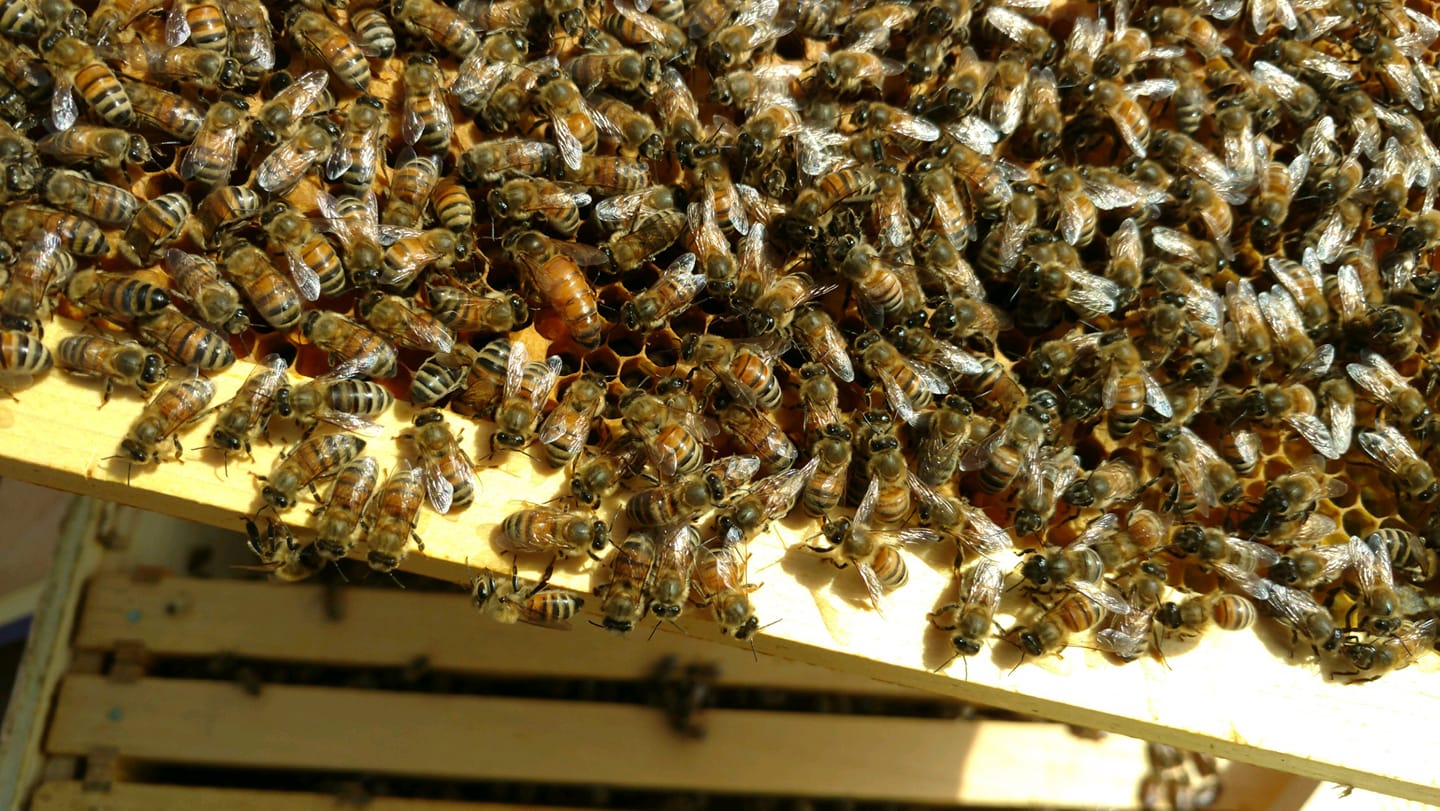
June 17, 2025 Bee Association Meeting

Please join us this coming Tuesday, June 17th at the Community Services Building (106 E. Morgan St. Brevard, NC) to hear our guest speaker Carla Robertson. She has a lot of information to share. 6:30 pm to mingle and talk to other club members, with the official meeting starting at 7 pm

Carla Robertson is a second-generation commercial beekeeper based in Hoopers Creek, NC, where she plays a key role in her family’s business, Hoopers Creek Bee Company. Introduced to beekeeping at a very young age, Carla has developed a deep knowledge of what it takes to sustain a successful beekeeping operation in today’s challenging landscape.

Though based in North Carolina, Carla and her family are also migratory beekeepers, taking their bees to Florida each season to produce nucleus colonies, queens, and packages. In addition to their beekeeping work, Hoopers Creek Bee Company carries a full line of Amish-made beekeeping supplies, supporting both new and experienced beekeepers across the region.

Carla also helps run the Certified Honey Producer Program in North Carolina, which promotes transparency and quality in local honey production. She is the founder of the Save American Honey movement, a national effort to educate consumers on the importance of buying honey directly from U.S. beekeepers. Through open conversations with fellow beekeepers, Carla is shining a light on the growing threat of imported and falsified honey in the market and working to get real U.S. honey back into homes across the country.

May 20, 2025 Transylvania County Beekeepers Assoc Minutes

Please check your spam folders for meeting reminders. I had several come back as undeliverable for spam filters. Please make sure to add this email address to your email list to avoid spam. 

5/20/25 Meeting Minutes:

There were 17 people in attendance. David made a motion to approve the 4/15/25 minutes as emailed out on 4/21/25. Dean seconded the motion. All were in favor. 

John Carrico was our guest speaker. John has been a paramedic for 20 years and has been flying with MOMMA as a paramedic for 11 years. His presentation was on anaphylaxis.

1 in 50 people will have an anaphylactic reaction sometime in their life. The word is from Greek; Ana means against; Phylaxis is reaction. It is a severe, potentially life threatening, systemic allergic reaction that usually happens in less than 2 hours. The body reacts to exposure of an antigen.

Benadryl can help with the allergic reaction. Seasonal allergy medicine will not help. You need benadryl. 

However, if it is a severe, life threatening reaction, you need to call 911 to get help right away. You will need a shot of epinephrine, if you don’t have an epi pen available. When using an epi pen, you need to keep it in for 2-3 seconds for it to work. Make sure to put your thumb in the right place in order not to jab your thumb instead of your leg or arm when administering the epi pen. An increased heart rate is one side effect of epinephrine; therefore, it may be best to call 911 if you have a history of heart or other medical conditions. After 5-10 minutes, the heart rate will start to go back down to normal. 

There is no rhyme or reason for anaphylaxis shock. Someone never allergic can all of the sudden become allergic. The number one anaphylaxis reaction is a food allergy (shellfish, fruits, nuts, etc.). Other causes are insect stings, animal dander, latex, medication. 

There are different levels of an anaphylaxis reaction. The first level is a localized reaction. The reaction happens in one spot. Nowhere else on the body reacts to the sting/exposure. 

The second level of an anaphylaxis reaction is systemic. Benadryl is a good antidote. One may have hives and itching all over the body. The reaction happens in multiple systems in the body. There are no life threatening symptoms.

The third level is anaphylaxis shock. The body tries to shut down to other antigens in the body. Vasodilation occurs. One becomes pale, sweaty. Blood pressure drops making the person dizzy, light headed and confused. They may feel like they are going to pass out and speak without making sense. Smooth muscles start to swell (throat, mouth, tongue), making it difficult/impossible to breathe. Wheezing and coughing may occur. The GI tract may become affected making one feel sick to their stomach, or have diarrhea due to the fact blood moves away from the digestive tract.  

The more exposed one is, the reaction may become more severe. 30 bee stings are more likely to affect someone than 5. More people die from drug allergies (see attached chart).

If you have an allergic reaction, you will probably react again to the same allergen again. If the reaction happens suddenly, you should be more concerned. 

When you are stung, it is best to scrape the stinger out using a hive tool, credit card, or finger nails. Then smoke the area to prevent bees from coming after the infected area to sting more. Don’t use tweezers. Tweezers, or squeezing the stinger just squeezes more venom into the sting area. A good beekeeper always keeps benadryl on hand. 

All in attendance appreciated John Carrico’s presentation. We learned a great deal about anaphylaxis.

Several different swarms have been caught by those in attendance. The honey flow is sporadic. Good in some places and not so good in others. 

Next meeting will be June 17, 2025. 6:30 to 7 pm will be social time. 7-8 pm is the official meeting time. 

April 15, 2025 Meeting Minutes

4/15/25 Meeting Minutes

There were 13 people in attendance. Randy made a motion to approve the 3/18/25 minutes as emailed out on 3/26/25. Ellis seconded the motion. All were in favor. There was no treasurer report this month.

Dave Ellis caught three swarms in one day. All were at different locations. Be on the lookout for swarms. Dave uses swarm commander to help attract the bees. The location of the swarm boxes are not very high. One was even on the ground. Wait 2-3 days once the bees move into the swarm trap before removing them. Some have found if you put honey in the swarm trap, the bees will more than likely rob the trap and not stay in it. 

One member built a Russian Scion to catch swarms. It is an easy method. However, you have to be able to get the swarm right away before they leave. There are a lot of sites on the internet about making one and how they work.

Hive beetles and ants are worse in FL than in our area. Some members use diatomaceous earth and cinnamon to keep ants out, but the rain washes it away, so you have to reapply it. 

Rosemary Ennis has a 10 frame shallow box and three supers for sale. It is just the boxes, no frames for around $60-$70. You may email her if you are interested: brdjen4@yahoo.com

Randy is catching swarms. He doesn’t want anymore bees to take care of. You can email him if you would like one of his swarms: flenviro@gmail.com. If you have too many bees and catch some swarms, please reply to this email with your name and contact information. We can let others know if they are interested and need more bees.

Everyone mentioned how many hives they were managing. Some were just getting back into keeping bees. Most were in agreement that if you were beekeeping for a hobby, 6-8 hives is about the right number. Any more requires a lot of work and time. 

Our next meeting will be the third Thursday, May 20th at 6:30 pm to socialize, with the meeting beginning at 7:00 pm. Same place: 106 E. Morgan St. Brevard, NC, The Community Services Building. Hope to see you all in May!

April 15, 2025 Meeting

Hope to see you all for our next meeting, on tax day, April 15th. Same place, 106 E Morgan St, Transylvania County Community Services Building, Brevard. You can come early at 6:30 pm to socialize and see how other bees are doing. The official meeting will start at 7 pm and end around 8 pm. We are now meeting on the third Tuesday of the month to have a little more time to socialize. See you soon. 

March 18, 2025 Minutes

There were 20 people in attendance. Marvin made a motion to approve the 2/4/25 meeting minutes as emailed out and posted on the website on 2/7/25. Randy second the motion. All were in favor. Sheila stated we have a $498 balance in the association’s fund. We have 18 paid members to date. The Transylvania County Beekeepers Association has been contacted by the local camp association to work with the camps in their education program. Please let Devin know if you are interested in working with the local camps to educate them about bees. 

The speaker for the meeting was David Ellis. David is a former commercial beekeeper from Maine and relocated to our area. He has six decades of experience in beekeeping. We have a lot of floral sources for bees from March to September, unlike a lot of other places, such as Maine. 

When starting to keep bees, you need to determine your goals. Most important goal is keeping your bees alive. Think about what you want out of your bees (nucs, queens, honey, pollination for farmers, etc.). Keep an annual calendar of what you need to do each month regarding your bees. 

Around valentines day (weather permitting) you can do a quick first inspection just to determine if your hives are dead or alive. A quick peak in the box and/or by lifting the box to see how heavy it is. If they are dead, you will need to clean out the hive and disinfect it with a 5:1 part of water and bleach. Spray down the frames and let them dry in the sun. Wipe down the bottom boards and inside of the hive with the disinfectant. If you need to feed your hives in February, you want to use sugar, not syrup because it is still too cold. 

The second inspection is in March, when the temperatures are above 60 degrees. Out of ten hives, you may have 25% weak, 50% perfect and 25% real strong. The real strong hives may result in a swarm. You want to make sure you keep the real strong hive flourishing. In November David usually puts some sugar and a winter patty in the hive. If they ate it all in February, then it is a strong hive. If not, it is a weak hive. You may want to think about requeening, or combining weak hives. In March you can start feeding syrup to hives that have a little honey supply at a 1:1 ratio. If there are no bees in the bottom hive, David takes it off and cleans it up, moving the top box down. He adds space, an extra box to the strong hives around mid March. Look for sealed brood in March. If there is a lot of brood, you will need to split the hive around the first part of April to prevent a swarm. David doesn’t reverse boxes if the bottom box is empty and the top is full, but some beekeepers do. 

During the spring/late winter months, you need to work quick and efficiently when peeking inside your bees. Try not to disturb your bees too much. Make sure you have your smoker going good and equipment ready to go. 

Bees out breed the mites this time of year. Around 60% of hives will have no mites if you test for them now because the mites are in the brood and will hatch out in May during the honey flow. Best time to treat your bees is now, before the honey flow. Otherwise, you will have to wait until after the honey flow sometime in June. David likes to use Oxalic acid or Apistan this time of year for mite treatment. When David goes into his hives he also likes to dust them with a little powdered sugar, chaga and reishi mushroom mixture to keep them healthy and hopefully keep down the mite count. 

Watch the bees to see what they are bringing into the hive. If not bringing in any pollen, then there may not be a queen, or she is weak. If the bees are crawling on the ground and acting unusual, they may have a virus, mites, or have been affected by some chemical in the environment. Plant stuff your bees like to provide them food and energy. 

David Ellis also raises queens. It is best to plan ahead for new queens. David sells queens and queen cells. Queen cells are 1/3 of the cost as a queen, but the queen is accepted better than the cell. In August you will need to start getting your bees ready for winter by feeding them, etc.

Hope to see everyone at our next bee meeting on tax day, April 15, 2025. You can arrive at 6:30 pm to share your bee news and hear about other bees. The meeting will start at 7 pm at the Community Services Building 106 E. Morgan St. Brevard, NC. 

March 18, 2025 Meeting

Hope you can join us for the next Transylvania County Beekeepers Association this coming Tuesday, March 18th. We now have the meeting facility at the Transylvania Community Services Building (106 E. Morgan St. Brevard) for an earlier time (6:30 pm) to socialize and get to know other beekeepers in the community. The official meeting will begin at 7 pm. If 6:30 is too early, hope you can make the 7 pm meeting. 

We will have a special presentation: “Planning for late March and April in the Bee Yard”, by David Ellis. David is a retired commercial beekeeper from Maine. He managed thousands of hives for honey production and pollination across the US, and now manages a 50 hive operation here in Transylvania County. David raises excellent queens and consistently  has very high winter survival rates.  Come learn from David to help you feel more prepared heading into this year’s bee season! 

Spring is just around the corner. The bees are out and about enjoying the warm, sunny days. I encountered a nice surprise when I found some honey bees feeding on the sugar maple in our yard. Attached is a picture of the bees filling up on the syrup. You may need to zoom in to see all the bees. The whole tree trunk was covered in bees.

January 7, 2025 Meeting Minutes

There were 14 in attendance. It is time to renew membership to the Transylvania County Beekeepers Association. $10 for an individual and $15 for a family. The membership will help secure speakers, cover the cost of future bee expos, grow the local association, etc. Currently we have around 20 paid members. If you would like to join the association, you may pay your dues at the next meeting, or mail a check payable to The Transylvania County Beekeepers Association PO Box 92 Brevard, NC 28712. 

You may also want to consider joining the state beekeepers association: https://www.ncbeekeepers.org/membership/join-or-renew-now It is a good resource for more information. The state association has also been assisting beekeepers who lost their apiaries from hurricane Helene. 

The Henderson County Beekeepers Association is also starting their annual beginner’s beekeeping class on January 27th: https://hcbeekeepers.org/education/2021-beginner-beekeeper-education-enrollment-2-2-2-2/

It was also time to vote in the local board. All current officers agreed to continue unless someone else in attendance wanted to take over their office. Randy Austin appointed Sheila Holland to continue serving as Treasurer. Carolyn Thompson seconded the vote. All voted in favor. Sheila Holland nominated Priscilla Tinsley as secretary. Mary Caldwell seconded the vote. All voted in favor. Priscilla Tinsley nominated Dean Klingensmith as vice president. Jim Thmpson seconded the vote. All voted in favor. David Knierim appointed Devin Gentry as president. Dean Klingensmith seconded the vote. All voted in favor. Sheila did mention that this would be her last year as treasurer for members to be thinking about serving next year.

Mary Caldwell asked that we create a list of members who would be willing to share their email and/or phone number to volunteer as mentors and/or be available to answer general questions from other members who may run into something unusual going on in their hives. We will work on getting that available for the future.

Members discussed feeding the bees in the winter. It is important not to go into your hives when we have cold temperatures. The temperature should be at least 50 degrees or above. If it is near 50 degrees, you don’t want to spend too much time in the hive. The bees need a lot of food (frames of honey) stored up for the winter. If they are running low and we have an unusual warm winter day, it is best to feed them some kind of dry food such as a bee patty or dry sugar. It isn’t a good idea to feed sugar water in the water because of moisture building up within the hive. Most members in attendance do not insulate their hives in the winter. They leave it up to the bees to keep it warm inside.

David Ellis had attended a northern conference beekeepers meeting. A lot of the beekeepers were experiencing a 30-40% loss in their bees this year mostly due to droughts. David also shared some bee books he had and some Betterbee catalogs. Reading up about bees on these cold, snowy days can help the local beekeeper.

There are several species of honey bees. There isn’t really a way to keep your bees a one species apiary. They fly around to other hives and mix up the species. Members discussed how it is best to have smaller bee yards in several areas rather than one large bee yard due to bears, disease, etc. 

Meeting adjourned a little after 8 pm. Please mark your calendars for next month’s meeting (first Tuesday of the month), February 4th at 7 pm, Transylvania Community Services Building, 106 E. Morgan St. Brevard. 

bers in attendance do not insulate their hives in the winter. They leave it up to the bees to keep it warm inside.

David Ellis had attended a northern conference beekeepers meeting. A lot of the beekeepers were experiencing a 30-40% loss in their bees this year mostly due to droughts. David also shared some bee books he had and some Betterbee catalogs. Reading up about bees on these cold, snowy days can help the local beekeeper.

There are several species of honey bees. There isn’t really a way to keep your bees a one species apiary. They fly around to other hives and mix up the species. Members discussed how it is best to have smaller bee yards in several areas rather than one large bee yard due to bears, disease, etc. 

Meeting adjourned a little after 8 pm. Please mark your calendars for next month’s meeting (first Tuesday of the month), February 4th at 7 pm, Transylvania Community Services Building, 106 E. Morgan St. Brevard. 

Free Vectors | little three-dimensional announcement bee

437 × 340